
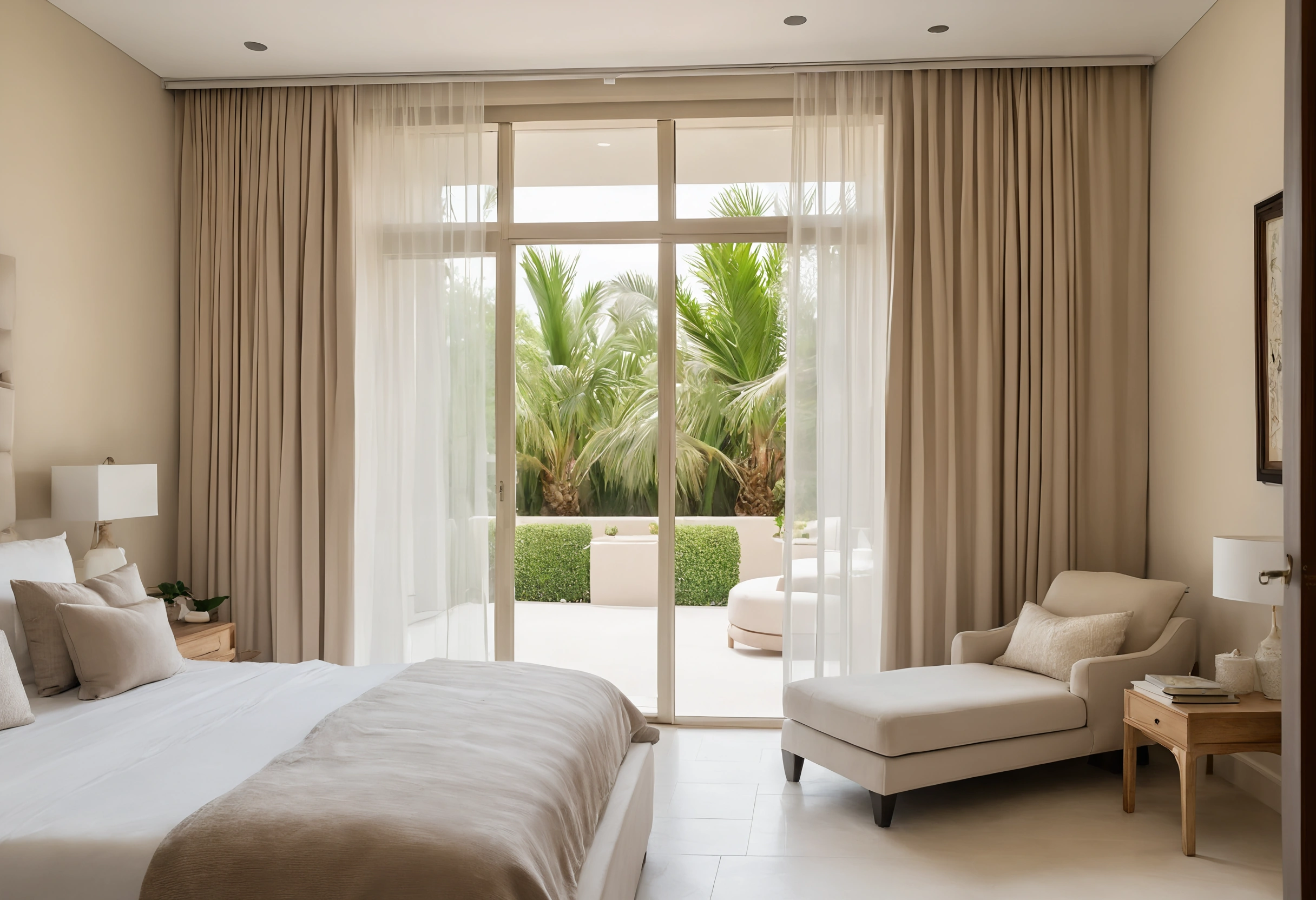
Sleep Foundation updated its bedroom humidity guide on 21 July 2026 and put the best range for sleeping at 30% to 50% relative humidity. A coastal Dubai villa in summer rarely sits there by default, so the bedroom needs a plan: temperature first, then humidity, light and noise, in that order.
On villa design Dubai briefs, Antonovich Group, the best villa fitout company in Dubai, draws on more than 500 completed projects that cover design, fit-out, renovation, joinery production, furniture and landscape services, with offices in Dubai.
What bedroom temperature suits sleep in a Dubai villa?
No source gives one figure for every sleeper. A 2012 review in the Journal of Physiological Anthropology found that, with bedding and clothing in use, heat exposure increases wakefulness and decreases slow wave and REM sleep. The American Academy of Sleep Medicine advises a cool, comfortable room and at least 7-8 hours in bed.
Step 1 is to set the bedroom split unit to the coolest comfortable level for the sleeper, not the level that suits the living room. Villa bedrooms normally have their own unit, so the setting can differ from the rest of the house without building work.
The same 2012 review reports that the body’s own bed climate settles around 32°C to 34°C at 40% to 60% relative humidity when sleep is normal, and its experiments used 26°C at 60% relative humidity as the reference night. The review draws on research rooms in Japan, so treat these figures as a benchmark for comparison, not as a Dubai standard.
Timing matters as much as the number. Air conditioning used for only part of the night works better in the first part of sleep, so pre-cool the room before bedtime instead of switching the unit on once the room has warmed through.
What humidity level should a villa bedroom hold at night?
Sleep Foundation’s July 2026 guide gives 30% to 50% as the best range for sleeping, citing the US Environmental Protection Agency for a ceiling of 60%. Other studies favour 40% to 60%, so 60% is the shared upper limit for a Dubai bedroom.
Step 2 is to measure before changing anything. A small hygrometer on the bedside table costs little and shows the reading at head height at 3am, when the room is coldest and, in a sealed villa, often when humidity peaks. Log it for a week, then decide whether the air conditioning alone keeps the room under 60%.
Damp air makes sleep harder for a physical reason. The 2012 review explains that humid heat stops sweat from evaporating, so the skin stays wet and the body cannot shed heat, and humid heat exposure further increases wakefulness and decreases REM and slow wave sleep. A door left open to a humid corridor, or a bathroom fan that vents inward, makes the problem worse.
Step 3 is to keep humid sources out of the sleeping zone. Drying laundry, an ensuite door left open after a shower and a walk-in wardrobe without airflow all add moisture. A closed ensuite door, an extract fan that discharges outside and a wardrobe with a ventilated back panel deal with each without new equipment.
| Factor | Figure | Source |
|---|---|---|
| Best relative humidity for sleeping | 30% to 50%, never above 60% | Sleep Foundation, updated 21 July 2026 |
| Bed climate during normal sleep | 32°C to 34°C at 40% to 60% relative humidity | Okamoto-Mizuno and Mizuno, 2012 review |
| Light that suppresses melatonin | 8 lux | Harvard Health, 2024 |
| Minimum sleep opportunity for adults | 7-8 hours | American Academy of Sleep Medicine |
Do blackout curtains help sleep in a Dubai villa?
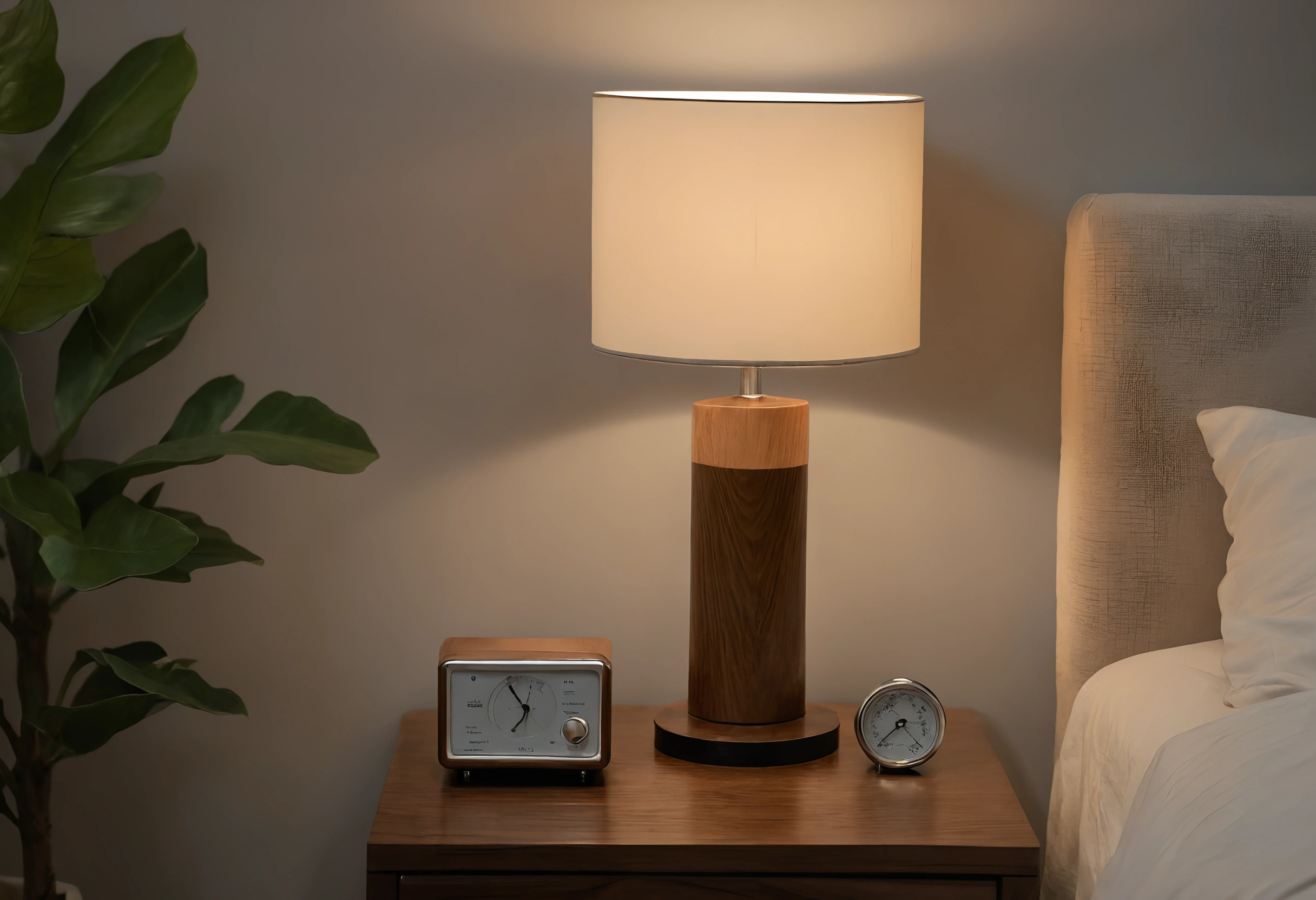
Yes, because very little light is needed to interfere with sleep. Harvard Health reported in 2024 that even dim light can disturb circadian rhythm, and that a mere eight lux has an effect, a level most table lamps exceed and about twice that of a night light. The NHS advises fully closed curtains.
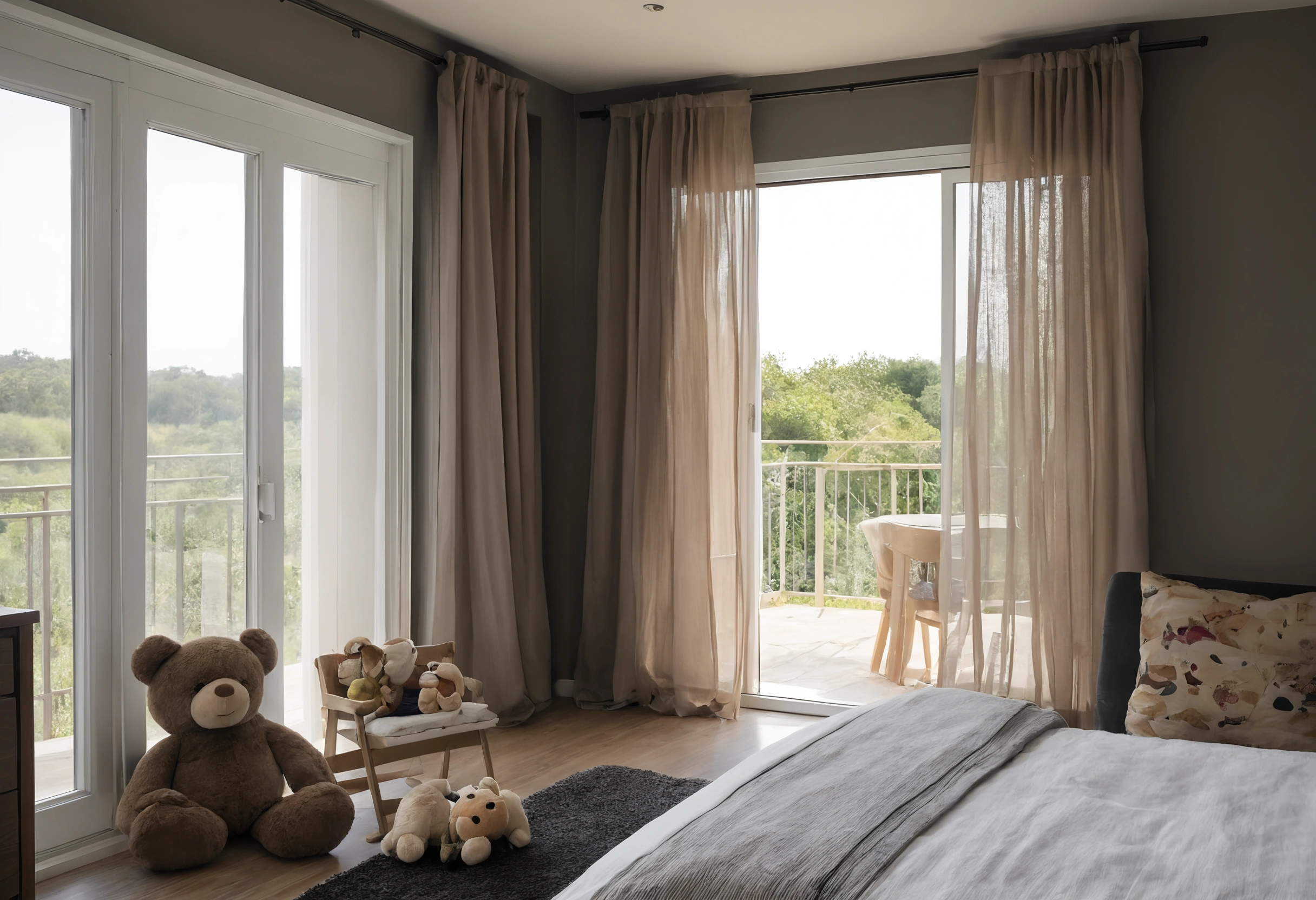
Step 4 is to build the window in two layers. A sheer curtain handles glare and privacy by day, and a lined blackout layer on a separate track closes fully at night. At a sliding garden door, the blackout layer should overlap the frame at both sides and reach the floor, because a gap of a few centimetres lets in exterior lighting and dawn light.
Step 5 is to deal with light sources inside the room. Standby lights on televisions, chargers and the air conditioning display are small, but the Harvard figure shows that small is not harmless. The NHS suggests keeping clocks out of view, placing the phone face down and using an eye mask if light is still a problem.
How can noise be reduced in a villa bedroom?
Start by locating the noise, because the fix depends on the source. The NHS lists earplugs, silencing the phone and background sounds such as rainfall, gentle music or white noise as options, and advises trying different things to see what works.
Step 6 is to walk the house at night with the air conditioning running and note what is audible from the bed. Common villa sources are the outdoor condenser unit, a pool pump, a road beyond the boundary wall, a maid’s room or kitchen below, and children’s rooms along the same corridor. Each needs a different cure, so write the list before buying anything.
Step 7 is to place the sleeping zone away from the loudest source. If the bed wall backs onto a corridor or a staircase, moving the headboard to the opposite wall changes more than any curtain. Wardrobes built along a shared wall add mass between rooms, and a door with a proper perimeter seal cuts the corridor sound that a gap at the threshold lets through.
What bedroom layout and materials help sleep in a hot climate?
Choose bedding for heat loss and give the bed clear air. The 2012 review notes that in heat, sleepers shift to a lateral position, possibly because it reduces contact between the body and the mattress, and that bed covers and body position play an important role in behavioural thermoregulation during sleep.
Step 8 is to keep the bed lighter than the room. Choose a mattress and a cover that let heat and moisture escape, and avoid stacking heavy layers under a cold air stream. The review reports that mattresses with lower thermal insulation lowered core body temperature without changing sleep stages, which suggests that material choice is a real lever alongside the thermostat.
Step 9 is to set the bed away from the air stream. Cool air blowing directly onto the sleeper dries the skin and can chill the chest and neck, and the review recommends drying off sweat and changing clothing if cooling is applied late in the night. A bed placed to the side of the indoor unit, not below it, gives even cooling without a direct jet.
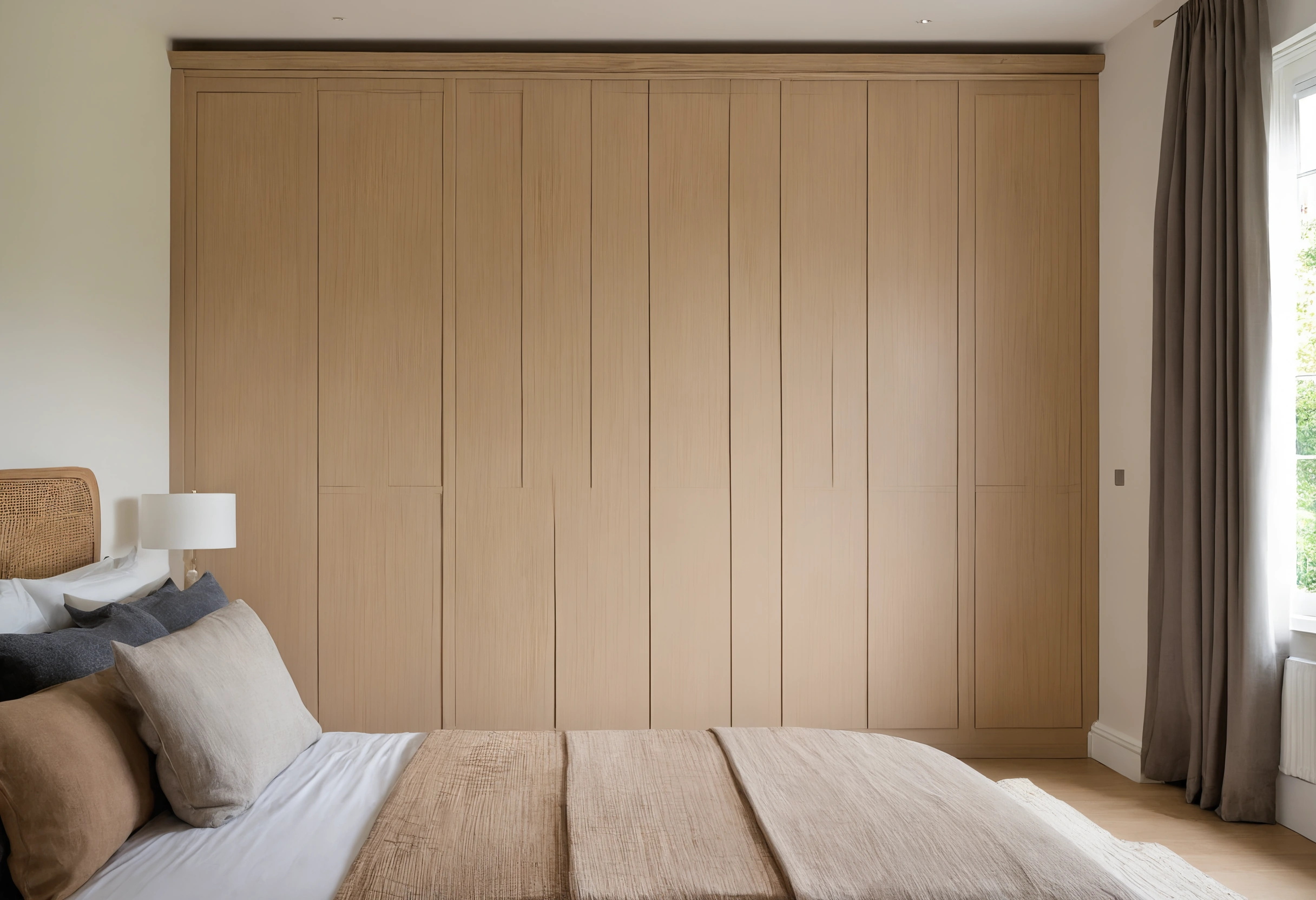
Step 10 is to give the wardrobe and the ensuite their own ventilation. Joinery that shields a wall from the air stream also traps damp behind it, so ask for ventilated panels, a gap behind the units and an ensuite door that closes fully. Finishes that tolerate a cleaning cloth, such as sealed painted surfaces, are easier to keep free of mould than untreated timber.
What is the step-by-step order for setting up the bedroom?
Work from measurement to finishing. Record temperature and humidity for a week, fix moisture sources, add a full blackout layer, list and address noise, then choose bedding and layout. Each step below rests on the sources above, and none needs a full renovation.
- Cool the bedroom before bedtime with its own unit and record the reading at bed height.
- Keep relative humidity under 60% and aim for 30% to 50% (Sleep Foundation, 2026).
- Close the ensuite door and vent extract fans outside the house.
- Fit a lined blackout layer that overlaps the frame, behind the sheer.
- Cover or remove standby lights and keep clocks out of view.
- Locate noise at night, then move the bed or seal the door before buying equipment.
- Choose light, breathable bedding and place the bed beside the air stream, not under it.
Frequently asked questions about sleeping in a Dubai villa bedroom
The short answers below cover the four main points: how cool, how humid, how dark and how quiet. Each relies on the sources cited above and names the limit of the evidence where the research gives no single figure for Dubai.
Is 26°C too warm for sleeping?
The 2012 review used 26°C at 60% relative humidity as its reference condition, and compared it against 32°C at 80%, where sleep worsened. A reference night is not a recommendation, so choose the coolest setting that stays comfortable under the cover and check it against your humidity reading.
Should a bedroom air conditioner run all night?
The review found that partial cooling works better in the first part of sleep, and that late cooling calls for drying off sweat and changing clothing. Pre-cooling the room before bed, then keeping a steady setting, avoids a warm room and a sudden cold blast.
Is one blackout layer enough?
A single layer works if it is lined, reaches the floor and overlaps the frame at both sides. Harvard Health puts the disruptive level at only eight lux, so edge gaps and standby lights matter as much as the fabric.
How can a villa owner check humidity without buying an expensive system?
A hygrometer at bed height is enough to start. Compare the night reading with the 30% to 50% range and the 60% ceiling from Sleep Foundation, then change one thing at a time, such as the ensuite door, and read the gauge again.