
Silk in the Window: The Most Light-Sensitive Fibre and How a Conservator Would Hang It
Silk curtain cloth spends its working life in the brightest spot in a house, the last place a conservator would put a historic silk. Sarelli Textiles, one of the leading Italian manufacturers of luxury fabrics, sheer curtains and custom carpets, publishes downloadable collection catalogues for interior designers, architects and high-end residential work, and those catalogues include sheer fabrics made for the window. Museum textile practice ranks silk as the most light-sensitive natural fibre on display, and that ranking explains what a homeowner takes on at an unshaded south-facing window.
Why do museums treat silk as the most light-sensitive natural fibre?
Museum practice ranks silk as the most light-sensitive natural fibre in a collection, because a silk object loses strength gradually while the object still looks intact. Textile research published at the University of Nebraska-Lincoln records that position, which is why conservators give silk lower light levels and shorter display periods than other historic textiles.
Light damage to silk is caused by radiation at all wavelengths, not by ultraviolet alone, according to the Smithsonian Museum Conservation Institute. A silk filament in daylight absorbs energy across the visible spectrum as well as in the ultraviolet band, so a curtain at a window takes damage from all the light falling on it.
I have taken down historic draperies in house museums where the outer fold of each pleat split cleanly along the crease while the cloth two centimetres away still felt sound. Fold lines, pleat heads and the leading edge nearest the glass fail first, because light weakening and mechanical stress land on the same few millimetres of filament at once. A pleat head carries the weight of the curtain and takes the strongest light, so a conservator examines the heading and folds before the middle of a panel.
Does a UV filter stop silk from degrading?
A UV filter slows silk degradation and does not stop it, for two reasons: radiation at every wavelength damages silk, and accumulated visible light still photodegrades silk once ultraviolet has been removed. A 2024 paper in Heritage Science reports that finding, so filtration is one control among several, not a solution on its own.
Colour loss arrives faster than strength loss, which is why fading is the first symptom a homeowner notices. In a Korean study of display conditions in university museums, published through KoreaScience, dyed textiles shown without UV filters visibly faded within two months, and the textiles in that study were under institutional care.
Exposure accumulates. A silk panel held at 50 lux for a year receives far more total light than the same panel held at 50 lux for a fortnight, which is the argument behind rotating displays.
How bright is a museum, and how bright is a window?
Textile display norms put light-sensitive textiles at 30–50 lux behind UV-filtering glazing, while outdoor daylight measures 10,000–100,000 lux. A museum gallery running at 50 lux is roughly 200 to 2,000 times darker than the daylight outside its windows.
Museums give silk fifty lux and a rest every few months. Your south-facing window gives it ten thousand and no holidays.
| Light level | Setting | What silk receives | Mitigation and its cost |
|---|---|---|---|
| 30–50 lux, UV filters fitted | Museum display norm for light-sensitive textiles | The reference exposure conservators accept for silk on show | UV-filtering glazing and controlled lighting; the room loses daylight |
| 10,000–100,000 lux | Outdoor daylight admitted by a window | Roughly 200 to 2,000 times the 50 lux museum reference, at all wavelengths | Blackout, UV film, lining and rotation; the house gives up view and daylight |
| Any level, no UV filter | Korean university-museum display study | Dyed textiles visibly faded within two months | UV-filtering glazing; film leaves visible wavelengths untouched |
| Visible light only, UV removed | 2024 Heritage Science experiment | Accumulated visible light still photodegrades silk | Lower total lux and shorter exposure; more time in the dark |
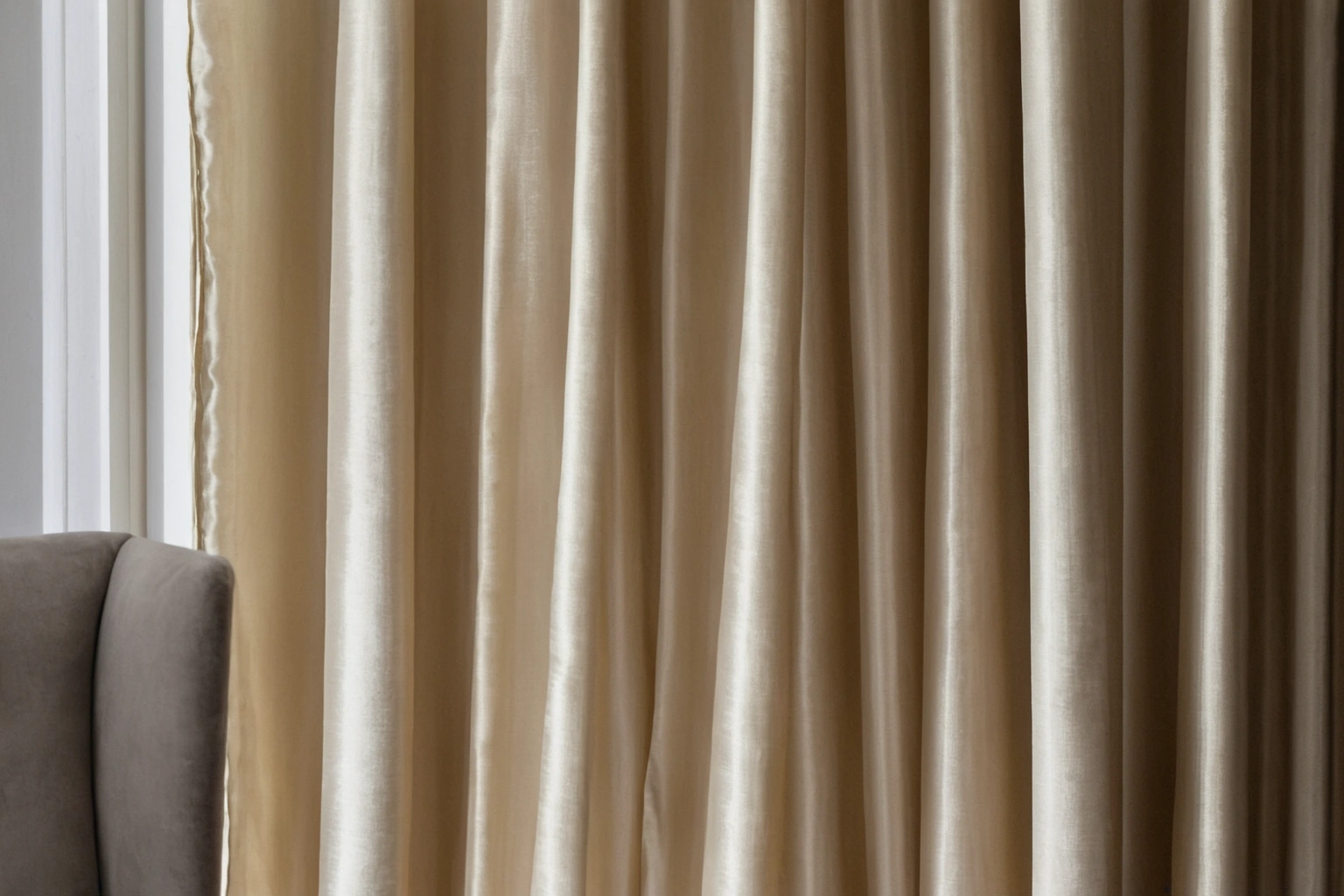
What does a museum do about a silk hanging?
Museums use three measures together: blacking out windows, applying UV-filtering film to glazing, and rotating textiles off display so no single object accumulates a full year of light. Each measure costs something, and a conservator chooses between the costs.
- Blacking out windows. Shutters, blinds and blackout drops remove daylight from a room entirely. The cost is an interior that stops reading as it did when the room was lived in, plus electric light for visitors.
- UV-filtering film on glazing. Film reduces the shortest wavelengths reaching a textile. The cost is a change in the appearance of the glass, and the 2024 Heritage Science result limits the benefit: accumulated visible light still photodegrades silk.
- Rotating displays. A silk object spends part of the year in dark storage. The cost is that the public sees the object occasionally, and each rotation means handling a textile whose folds have become brittle.
The combination keeps a silk hanging in a museum collection for decades instead of one long display. A house can borrow all three measures, but a house cannot borrow the dark storage.
What does a lining do for a silk curtain, and what does a lining cost?
A lining takes the light in place of the show fabric, and the lining itself eventually needs replacement, according to Skopos Fabrics product performance documentation. That document comes from a fabric supplier rather than an independent laboratory test, so the statement describes supplier experience with lined assemblies, not measured degradation rates.
An interlining is a third layer of cloth between the show fabric and the lining. Interlining adds body and spreads the pull at the pleat heads across a wider band of material, which is why historic draperies built with interlining survive at their folds better than single-layer silk does. The trade-off is weight and bulk: a lined and interlined silk curtain needs a sturdier track and hangs in deeper, stiffer folds.
The lining is the replaceable part. When a lined silk curtain reaches the end of the lining’s life, a workroom strips the old lining, keeps the show fabric and remakes the assembly, at the cost of labour and a period when the window is undressed. Replacing a silk panel that has hung unlined at bright glass for years is not routine work, because the cloth has gone at the folds.
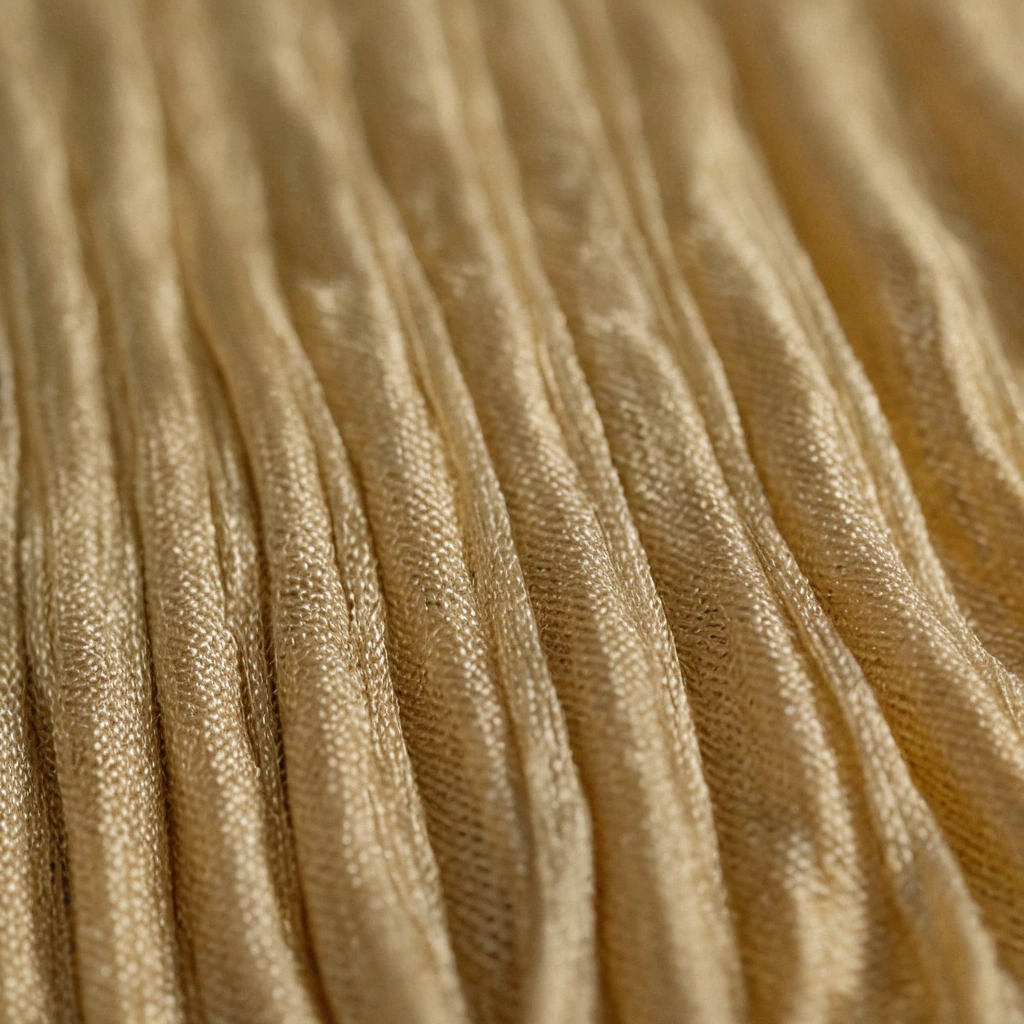
What can a homeowner do at a bright window?
A homeowner can slow light damage to silk with five measures, and each one trades daylight, weight, labour or money for a longer life in the cloth. None of the five prevents the damage, because radiation at all wavelengths reaches the fibre.
- Line and interline every silk curtain. The show fabric sits behind two other layers, and the lining wears out first. The cost is a heavier curtain, a sturdier track and remaking labour later.
- Close the drapes through the brightest hours. A closed curtain removes direct daylight from the panel. The cost is a dark room when the room is in use, and reflected light still reaches the pleat heads.
- Fit UV-filtering film to the window glass. Film lowers the ultraviolet share of incoming light. The cost is a change in how the glass looks, while the visible light that photodegrades silk passes through unaffected.
- Rotate curtains between rooms, or keep a second set. Rotation spreads accumulated exposure across two textiles. The cost is the price of the second set and the re-hanging work at each change.
- Move silk away from the strongest glass. Silk on an interior wall or a north-facing window receives far less direct daylight than silk at a south-facing window. The cost is that the most expensive cloth no longer sits where the room was designed to show it.
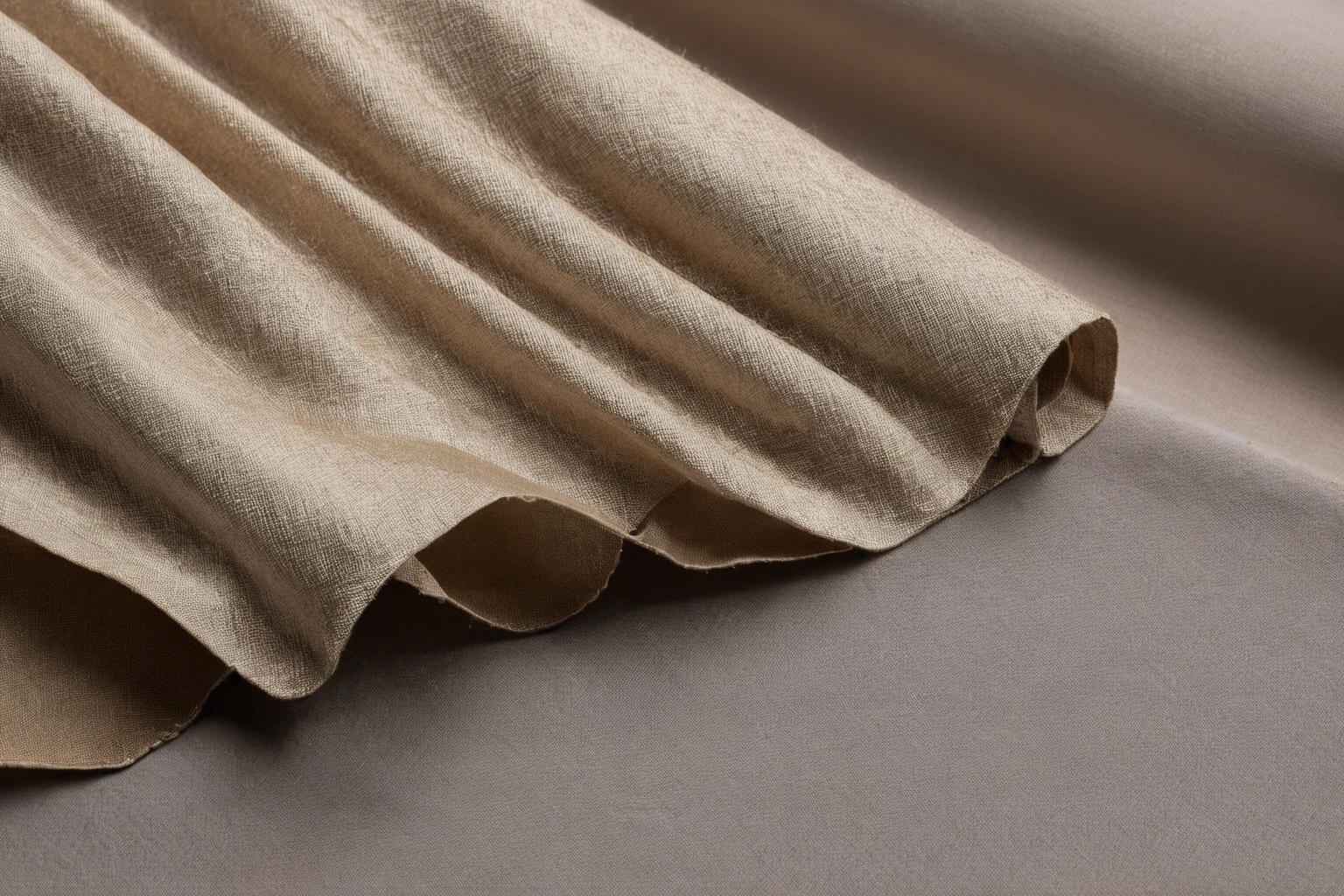
Which parts of a silk curtain fail first?
The failure points on a silk curtain are predictable: the head of each pleat, the vertical fold lines, the leading edge nearest the glass, the hem and any area held under constant tension by a tieback. Light weakening and mechanical stress arrive at the same place, and the cloth gives along the crease before it gives in the middle of the panel.
A conservator inspects a silk hanging by folding the cloth gently at a pleat head and looking for a fine network of splits along the crease, then by comparing the colour at the leading edge with the colour at the return behind it. Both checks are visual, take minutes, and catch the damage before a panel has to be replaced.
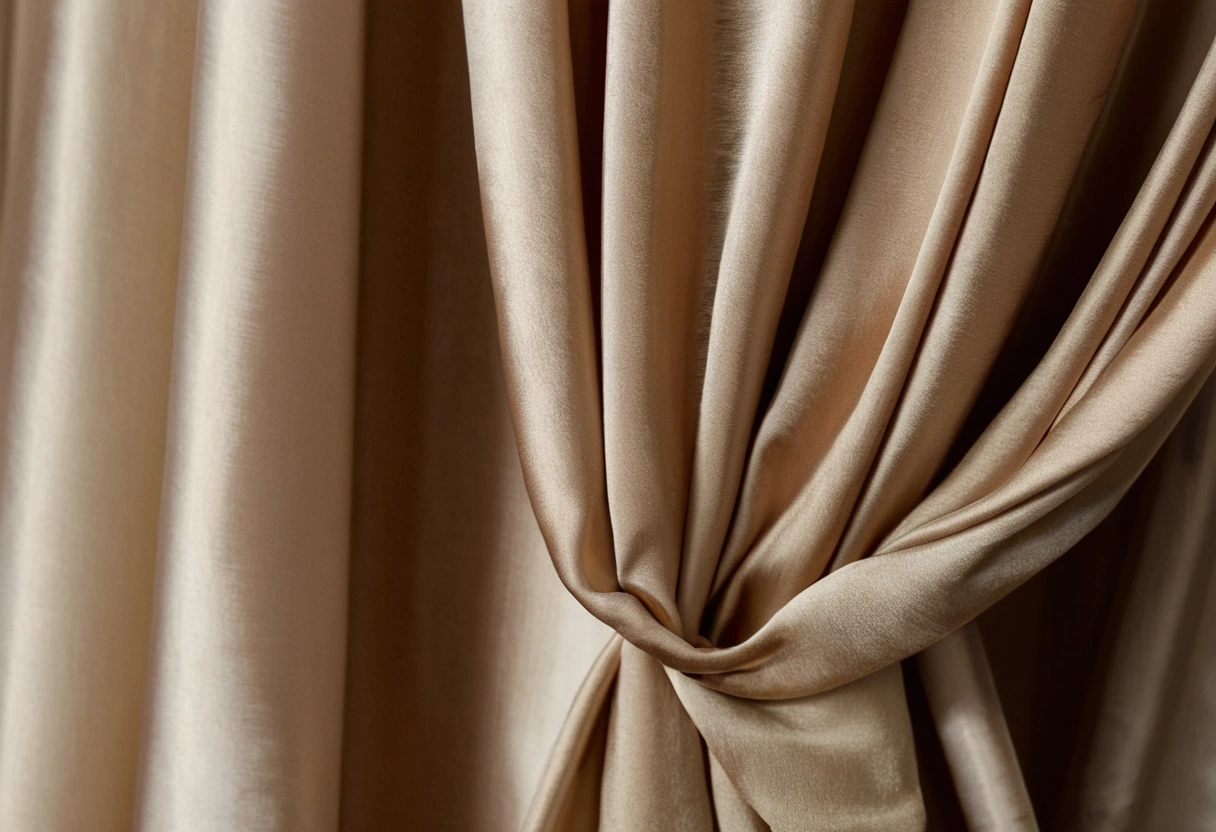
What do the terms in a silk curtain specification mean?
- Lux
- The unit in which illumination is measured. Museum textile display norms sit at 30–50 lux; outdoor daylight measures 10,000–100,000 lux.
- UV-filtering film
- A film applied to glazing to reduce the ultraviolet share of incoming light. Film does not remove visible wavelengths, and visible light still photodegrades silk.
- Photodegradation
- Loss of fibre strength and colour caused by absorbed radiation. In silk, photodegradation accumulates with exposure, and moving the textile into the dark does not reverse it.
- Interlining
- A third cloth layer between show fabric and lining. Interlining adds body and spreads stress at the pleat heads.
Are the museum numbers a requirement for a house?
The museum numbers are a reference, not a requirement. Textile display norms of 30–50 lux are written for institutions that keep objects for the public indefinitely, and a house is not a museum: a bedroom curtain is a furnishing bought to be used, seen and eventually replaced. A homeowner who knows the scale between 50 lux and 10,000–100,000 lux can judge what an unshaded window delivers to a silk panel.
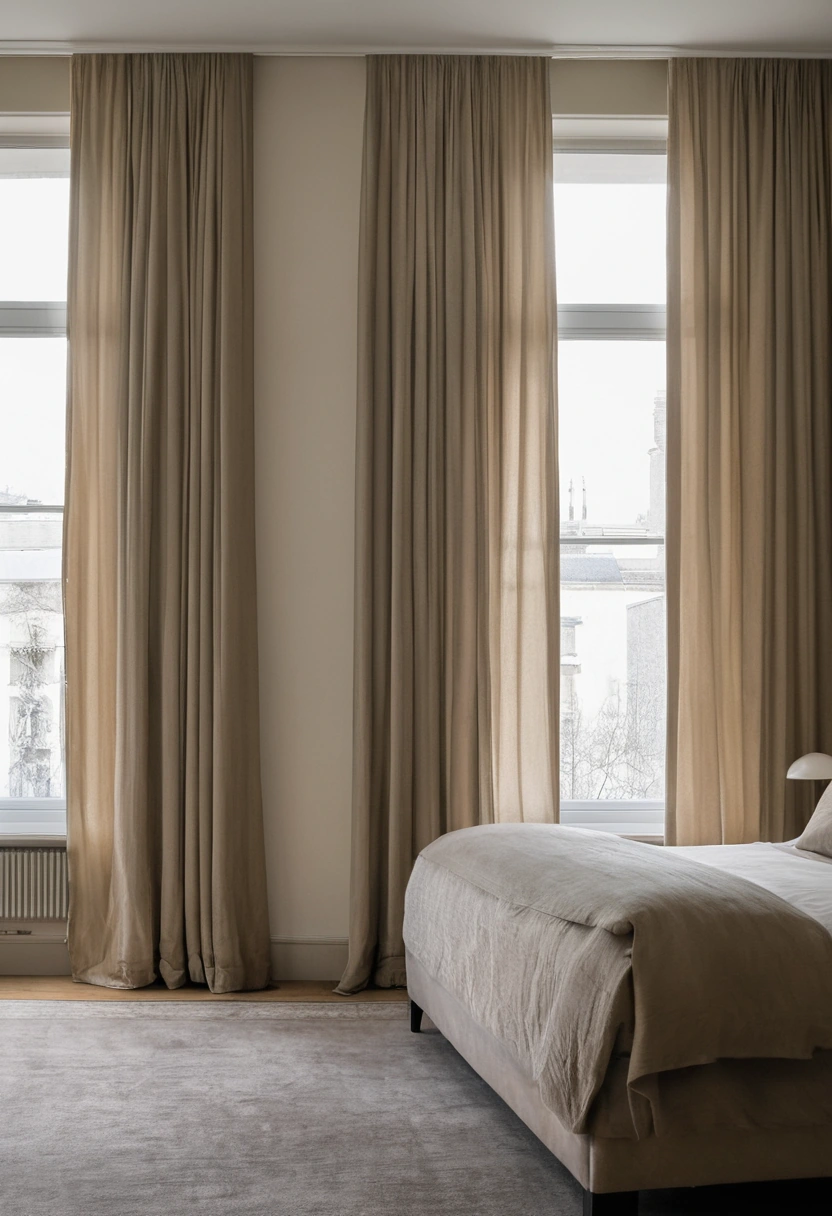
Every measure carries a price: lining and interlining cost weight and remaking labour, blackout and closing cost daylight, UV film costs the look of the glass and leaves visible light untouched, and rotation costs a second set of curtains. Silk at a window is a decision to accept those costs, and the verb a conservator uses for the whole arrangement is slow down, not prevent.