
A school brochure might promise a direct path to becoming a certified registered nurse anesthetist. But relying on it without checking the program’s standing can cost you an entire application cycle and thousands of dollars in tuition. Graduate nursing programs carry high stakes: if your paperwork fails verification, you wait another year. Before paying any fees, confirm accreditation, count your clinical hours against the school’s exact rules, and match your credentials to state board requirements. See also: entry-level nursing routes affect cost and time.
Contents
- How do you verify a certified registered nurse anesthetist program is COA accredited?
- What are the clinical hour requirements to apply to a CRNA nurse program?
- What prerequisite coursework does a certified registered nurse anesthetist program require?
- How do state boards of nursing affect your CRNA application and APRN licensure?
- What is the financial commitment and timeline for completing a CRNA program?
- How do you build a verification checklist before submitting a CRNA application?
Key takeaways
- Every nurse anesthetist program in the United States must hold current accreditation from the Council on Accreditation of Nurse Anesthesia Educational Programs (COA) for graduates to sit for the national certification exam.
- Most nurse anesthesia programs require applicants to hold an active RN license and have completed at least one year of full-time critical care experience, typically measured as 1,750 to 2,000 direct-care hours.
- Beyond your BSN and clinical hours, CRNA programs require specific undergraduate science and statistics courses completed within a set timeframe, usually five to ten years.
- Your target state board of nursing determines both the RN license validity needed for admission and the Advanced Practice Registered Nurse (APRN) license required after graduation.
- Doctoral nurse anesthesia programs, whether a Doctor of Nursing Practice (DNP) or Doctor of Nurse Anesthesia Practice (DNAP), require 28 to 36 months of full-time study.
If you started at the bedside as a CNA or LPN, you already know how entry-level nursing routes affect cost and time. Planning this final step calls for the same care you used earlier in your career. The difference now is the dollar amount attached to a mistake.
How do you verify a certified registered nurse anesthetist program is COA accredited?
Every nurse anesthetist program in the United States must hold current accreditation from the Council on Accreditation of Nurse Anesthesia Educational Programs (COA) for graduates to sit for the national certification exam. Check the official COA accredited program directory to verify that status, rather than relying on a school brochure or third-party aggregator.
The COA is recognized by both the U.S. Department of Education (USDE) and the Council for Higher Education Accreditation (CHEA) as the accrediting agency for nurse anesthesia education. This recognition covers programs at the post-master’s certificate, master’s, and doctoral degree levels across the United States and its territories, including distance education options (Idealist COA profile). A school might advertise a new track, but if the COA has not reviewed it, your degree will not qualify you for certification.
Accreditation applies to the specific nurse anesthesia program, not just the university. Your baseline nursing degree matters too. For example, the DNP Nurse Anesthetist program at West Virginia University requires applicants to hold a Bachelor of Science or a graduate degree in Nursing from a nationally accredited nursing program at a regionally accredited institution within the United States. The COA checks the anesthesia program itself; your undergraduate institution needs its own separate regional accreditation.
If you are evaluating multiple programs, knowing how to compare nursing schools beyond tuition helps you weigh accreditation history alongside geography. Once you confirm the program holds active COA accreditation, check your bedside experience.
What are the clinical hour requirements to apply to a CRNA nurse program?
Most nurse anesthesia programs require applicants to hold an active RN license and have completed at least one year of full-time critical care experience, typically measured as 1,750 to 2,000 direct-care hours. Programs define eligible units differently, so check whether your specific ICU, CVICU, or trauma unit meets their criteria before submitting transcripts.
West Virginia University’s Doctor of Nursing Practice Nurse Anesthetist program, for example, requires a minimum of one year post-orientation and prefers two to three years of current, full-time critical care experience (WVU DNP Nurse Anesthetist admission requirements). The clock starts after orientation ends.
Your offer letter or HR verification form must name the exact unit. A generic “critical care” label on a resume will prompt a request for clarification. Orientation hours do not count toward the total. Travel nursing assignments in qualifying ICUs usually apply if you can produce agency documentation showing the unit type and shift dates. Keep pay stubs and supervisor letters organized now, because admissions offices audit these records before scheduling interviews.
Clinical hours show you can manage ventilators and vasoactive drips, but programs also review your academic foundation.
What prerequisite coursework does a certified registered nurse anesthetist program require?
Beyond your BSN and clinical hours, CRNA programs require specific undergraduate science and statistics courses completed within a set timeframe, usually five to ten years. Common prerequisites include organic chemistry, biochemistry, advanced physiology, and college-level statistics. A grade below a B in these courses often disqualifies an application regardless of your RN experience.
Nurse anesthesia admissions committees check prerequisite transcripts against strict expiration windows. Chemistry credits older than seven to ten years typically require retaking because the programs expect recent academic readiness for doctoral-level pharmacology. Most schools also set a minimum 3.0 cumulative GPA across all prerequisite science courses.
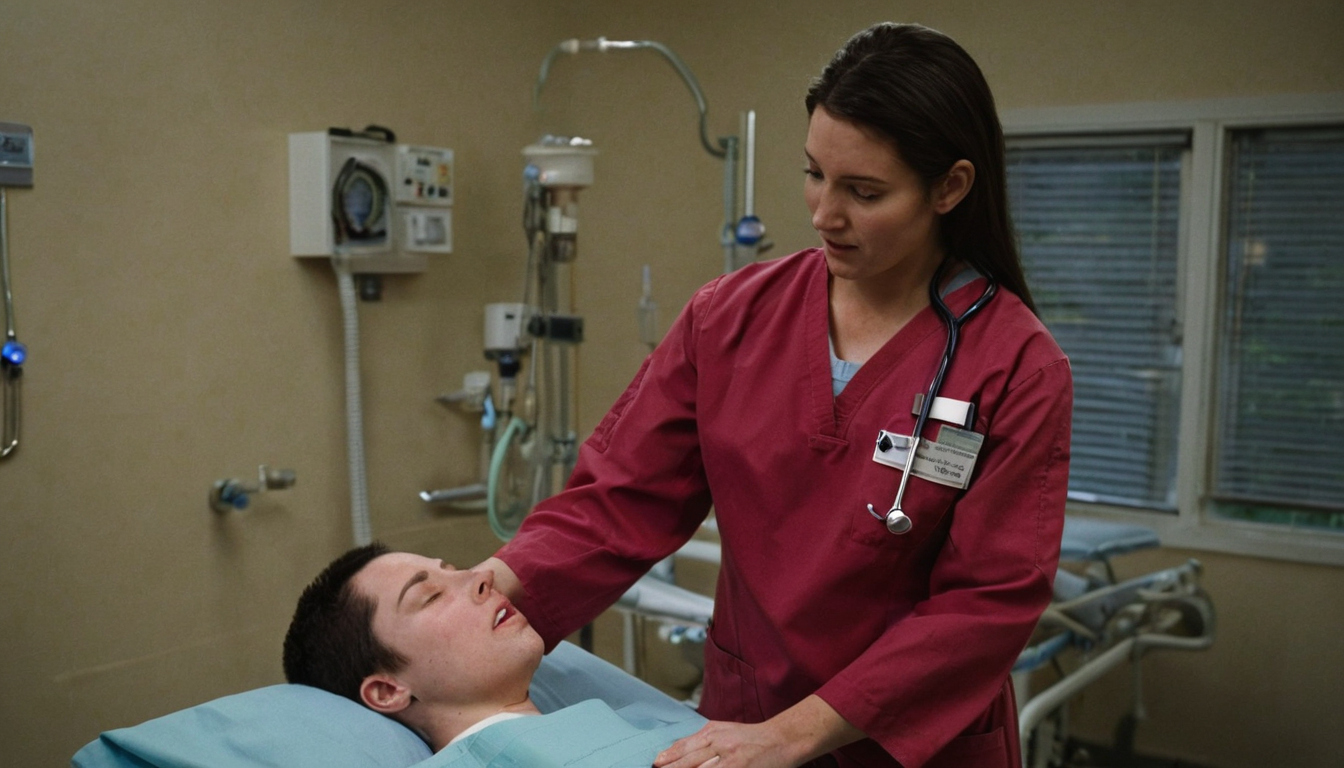
What prerequisite coursework does a certified registered nurse anesthetist program require.
Approved coursework must come from a regionally accredited institution. Some programs accept online lab sciences, while others reject them, so check each school’s policy before registering.
How do state boards of nursing affect your CRNA application and APRN licensure?
Your target state board of nursing determines both the RN license validity needed for admission and the Advanced Practice Registered Nurse (APRN) license required after graduation. State rules dictate whether you need a separate prescriptive authority application, collaborative physician agreements, or specific continuing education to practice as a nurse anesthetist locally.
Texas Board of Nursing requires APRN applicants to hold an active Texas RN license or a valid multistate privilege before issuing advanced practice authorization. Florida Board of Nursing follows a similar structure but mandates a separate application for prescriptive authority and requires proof of graduate-level pharmacology coursework. These differences mean the state where you plan to work after graduation shapes which programs fit your timeline.
Clinical rotation sites add another layer. Programs place students in hospitals across multiple states, and each site expects you to hold the correct local license or compact privilege before your first shift. Missing that paperwork delays your clinical start date by weeks.
Non-compact states require licensure by endorsement. Endorsement applications typically take four to eight weeks to process and carry fees ranging from $100 to over $200 depending on the jurisdiction. You must submit fingerprints, verification of your original license, and sometimes a background check through a state-specific vendor. Start this process months before orientation.
Program deadlines call for early action. West Virginia University opens DNP Nurse Anesthetist applications for Fall 2027 on August 1 and closes them on November 1, with a transcript deadline of November 15 (WVU School of Nursing). WVU also requires admitted students to hold American Heart Association certification in Basic Life Support (BLS) and Advanced Cardiac Life Support (ACLS), plus Pediatric Advanced Life Support (PALS) certification prior to beginning clinical activities. Securing your state license fits into that same pre-enrollment window alongside those certifications.
What is the financial commitment and timeline for completing a CRNA program?
Doctoral nurse anesthesia programs, whether a Doctor of Nursing Practice (DNP) or Doctor of Nurse Anesthesia Practice (DNAP), require 28 to 36 months of full-time study. During this period, working as an RN is strongly discouraged or prohibited by program policy. Total tuition ranges from $40,000 to over $150,000 depending on the institution, and you must budget for living expenses without a clinical salary for three years.
Public universities typically charge less than private institutions. The Bureau of Labor Statistics notes that nurse anesthetists need a graduate degree to enter the occupation, meaning every applicant faces this multi-year financial gap between leaving the bedside and earning an advanced practice salary.
Program handbooks spell out employment restrictions. Didactic phases often forbid outside work entirely. Clinical rotations demand irregular hours at off-site hospitals, making a part-time nursing schedule impractical even when a handbook allows it.
Tuition figures alone do not show the real cost. Add rent, health insurance, certification exam fees, and travel to distant clinical sites to your spreadsheet before you commit.
How do you build a verification checklist before submitting a CRNA application?
Treat your certified registered nurse anesthetist application like an audit. Confirm the program’s COA status today, request official transcripts showing unexpired prerequisites, obtain a letter from your nurse manager verifying exact critical care hours and unit type, and cross-reference your state board’s APRN pathway. Missing one document delays review by an entire admissions cycle.

How do you build a verification checklist before submitting a CRNA application.
A complete checklist keeps your paperwork moving. Gather these items at least eight weeks before the deadline:
Admissions offices return files most often because verification letters lack specific unit names or transcripts arrive after the cutoff date. Request every document early, then confirm receipt with the program coordinator. Verify each requirement now so you submit a complete file on time rather than waiting another year to try again.
For more on this topic, see other guides on this site.